

July 16, 1945
- Jul 16, 2023
- 2 min read
On this day in history in 1945 the first atomic bomb was successfully tested in New Mexico.
The Manhattan Project
By the late 1930s, with the world entrenched in World War II, it became apparent that this was a war like no other and it would require a weapon like no other to end it. Rumors abounded that German scientists were working on a bomb using nuclear technology and the allies knew if they succeeded, they would use it.
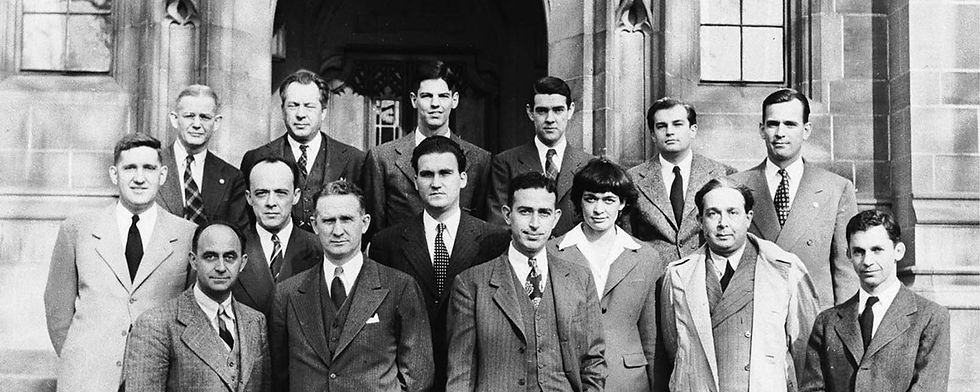
Even though the United States was not yet in the war President Franklin Roosevelt set up an advisory committee in 1939 to research uranium's uses as a possible weapon.
Several efforts were underway by the time the US entered the war. Scientists in Manhattan, Chicago, and even Canada, were working towards a uranium bomb. In late 1942 FDR combined these research efforts with the goal of weaponizing nuclear energy in what became known as 'The Manhattan Project.'

Trinity
There were many important locations throughout the project's existence. The research began in Manhattan (hence the name) and the first fission chain reaction was set off at the University of Chicago. New Mexico became important for the bomb's end stages. In the desert 120 miles from Santa Fe the first atomic bomb was detonated on July 16 under the code name "Trinity." The mushroom cloud reached 40,000 feet into the air and had the power of over 15,000 tons of TNT.
Using the Bomb in Action
Since the United States was fighting a war on two fronts the question soon became who to drop the bomb on: Japan or Germany. Although Germany was the intended target they surrendered before it had to be used. Unfortunately Japan chose not to surrender until two different atomic bombs were dropped on their country and WWII finally came to a bitter end.


Comments