

August 24, 79 A.D.
- Aug 24, 2023
- 2 min read
On this day in history in 79 A.D. Mount Vesuvius erupted.
Living Beneath a Catastrophe Brewing

Mount Vesuvius is less than 10 miles southeast of Naples, Italy. It's part of the Campanian Volcanic Arch, which consists of active, dormant, and extinct volcanoes in Italy's Campania region. The structure itself is a large cone that is partially encircled by the steep rim of a caldera. A caldera is a cauldron-like hollow that forms after the emptying of a magma chamber in a volcanic eruption. Mount Vesuvius' caldera is the result of a collapse from an earlier, higher structure during an unknown previous eruption.
Two ancient cities thrived at the base of Mount Vesuvius: Pompeii and Herculaneum. Pompeii alone had a population of about 20,000 people, which included merchants, manufacturers, and farmers. Herculaneum was much smaller at only 5,000 people. It tended to be a summer destination for rich Romans, rather than a full-year living space for most like Pompeii was. There were also even smaller resort communities in the area, such as Stabiae.
An Eruption for the Ages
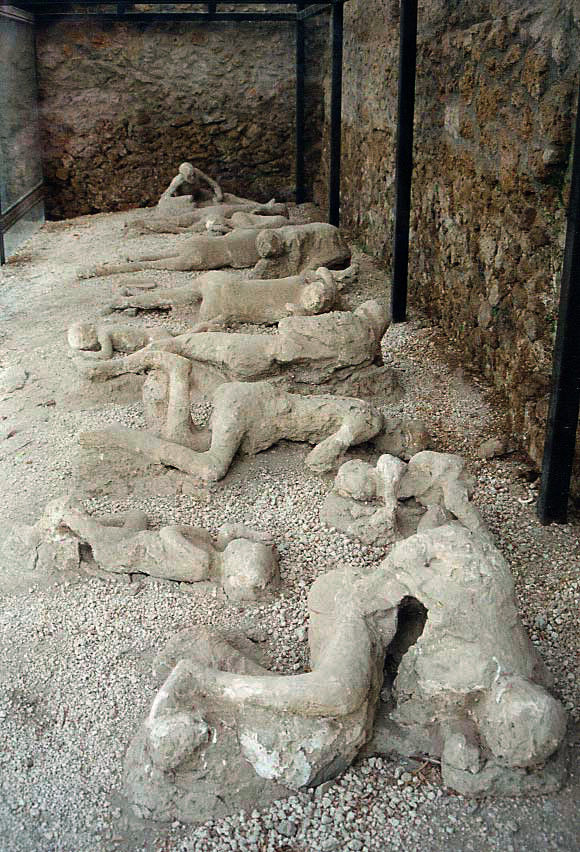
Around noon on August 24, 79 A.D. the peak of Mount Vesuvius exploded. A 10-mile mushroom could of ash and pumice shot into the stratosphere. The eruption lasted for 12 hours as volcanic ash and a hail of pumice stones, some as high as 3 inches in diameter, fell down on Pompeii. Most of the city's occupants fled but around 2,000 stayed in cellars that they never left.
Although a strong westerly wind originally protected Herculaneum from the eruption eventually a giant cloud of hot ash and gas came down the western side of Vesuvius and the city was engulfed. The city burned and those who weren't killed by the fires were asphyxiated. Meanwhile those who had remained in Pompeii were killed the following morning from a cloud of toxic gas that suffocated anyone who remained.
A Record of Destruction
Historians learned of the early eruption of Mount Vesuvius from an account by Pliny the Younger. He was staying along the Bay of Naples when the eruption happened. He wrote two letters to the historian Tacitus and told how, "people covered their heads with pillows, the only defense against a shower of stones,” and “a dark and horrible cloud charged with combustible matter suddenly broke and set forth. Some bewailed their own fate. Others prayed to die.” He was only 17 at the time and escaped the chaos, later becoming a writer and administrator.


Comments